Showing posts with label air conditioning alternatives. Show all posts
Showing posts with label air conditioning alternatives. Show all posts
Monday, May 16, 2011
 Troubleshooting Your Window Air-Conditioner
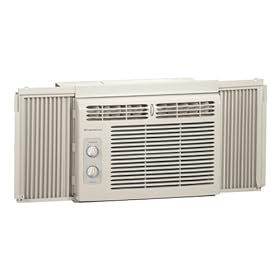
Window Mount Conditioners
If you use a window-mounted air-conditioner to keep your home cool, you know how powerful these little devices can be. Like a central AC system, a window air-conditioner has both indoor and outdoor components and when something goes wrong it can be difficult to determine where the problem lies.
Understanding Your Air-Conditioner
Inside the room you will find the evaporator coil, the part of the AC that gets cold, along with the fan or blower, the thermostat and controls, the filter and a plastic face panel.
Between the interior and exterior components is a panel that helps seal the unit in the window, preventing cool air from escaping and warm air from seeping in. This panel is usually expandable, so it is easy to customize the device to fit into your window, no matter what its size.
On the outside, you will find the air-conditioner’s compressor, the condenser and the fan that blows air across the condensing coil in order to cool it. Any moisture that collects inside the unit drains along the bottom and into a metal basin, which then drips to the outside of the house, through a hole or drain tube.
Now that you know the basics, it is time to take a look at some common in-room air-conditioner problems.
Water Dripping From the Front Panel
If you notice excess condensation or water dripping from the front of your air-conditioner, it almost always means that the drain pan is tilted incorrectly. Instead of guiding water toward the back of the unit and out of your home, the basin is allowing condensation to drain into the room.
Fortunately, correcting this problem is pretty simple. You just have to adjust the drain basin so that it tilts to the back of the unit and downward.
The Unit Cycles on and off Too Frequently
This generally indicates a problem with the unit’s thermostat or temperature sensor. Possible solutions include checking that the temperature sensor is positioned properly; near but not touching the evaporator coil. Move drapes and curtains away from the front panel. Remove leaves, branches and yard debris away from the exterior condenser. If none of these suggestions resolves the problem, call in a professional to service your AC unit, checking for refrigerant leaks and damaged components
Air-Conditioner Will Not Turn On
You could have a blown fuse, it could be a popped circuit breaker or the unit could be unplugged.
Obviously, you first want to make sure the air-conditioner is plugged in properly. If this fails to solve the problem you may have to replace the blown fuse or reset the breaker that connects to your AC’s power source.
Unit Keeps Blowing Fuses
If your AC is constantly popping the circuit breaker or blowing out fuses it usually means that it is hooked up to an inadequate power source.
Most residential window units require at least 120 volts of electricity operating off a 15amp circuit. You will need more power if your AC is larger. Run the air-conditioner from its own dedicated circuit; at least 20 amps, in order to correct the problem.
Related Air Conditioning Information from Horizon Services...
Thursday, July 29, 2010
Green Cooling Ideas for Your Home
 Staying cool in warm weather can be tricky business. Rising temperatures outside and strong sunlight beating down on your home and into windows make it difficult to keep indoor temperatures comfortable. Air conditioning certainly helps, but with the high cost of initial installation and mounting utility charges, this isn’t always the most practical option. Additionally, there is the issue of chemical refrigerants used by residential air conditioners that can contribute to pollution and global warming.
If you’re looking for a greener alternative to traditional air conditioning, the following common sense ideas and low-cost changes can cool your home without harming the environment or depleting your budget.
The best way to keep your home naturally cool in the summer is to prevent heat from building up indoors in the first place. The most obvious source of indoor heat gain is direct sunlight, which gets absorbed by your home’s roof, walls, and windows. Other, lesser known sources include air leakage around poorly sealed and insulated doors and windows, and heat from household appliances like dryers, dishwashers, and computers.
To keep heat from building up inside your home, use heavy curtains or blinds on windows to block direct sunlight, enhance the landscaping around your home with trees and shrubbery that help deflect or bar the sun’s rays, make sure doors and windows are properly sealed, turn off heat-generating appliances like televisions and computers when not in use, and limit the use of other appliances that use heat —- like the washing machine, dryer, and dishwasher—to early in the morning or after dark when outdoor temperatures are likely to be lower.
In hotter climates or in larger homes, simply deflecting the sun’s rays and restricting the use of heat-generating appliances are not enough to cool effectively. Fortunately, there are several environmentally responsible strategies you can employ to supplement traditional air conditioning.
Any time you can reduce the strain on your home’s air conditioning system, you’re saving money and lowering your energy usage (and impact on the environment). So things like shading windows and sealing doors are a good first step in greening up your home’s cooling. Fans and evaporative coolers go even further.
Ceiling fans won’t cool a room, but they make you feel cooler. Using a fan can make a room feel up to four degrees cooler than with air conditioning alone. Installing a fan means you can turn up your air conditioner several degrees, reducing your energy usage and helping you save money.
Evaporative coolers cool the air using water vapor and are only appropriate if you live in a dry climate. However, they consume about a fourth of the energy of conventional air conditioners, which makes them environmentally friendly and energy conscious.
There are now more rebates and financial incentives than ever for homeowners who choose energy efficient options for home cooling. Many utility companies and local governments participate in a variety of programs. If you’re thinking about greening your home’s air conditioner, contact your utility company or local environmental conservation agency for information about available programs in your area.
Related Information from Horizon Services...
Subscribe to:
Posts (Atom)
Subscribe!


 Posts
All Comments
Posts
All Comments
My Blog List


AddThis

Keystone Partner

Horizon Services is a Keystone Partner of Philadelphia Union, Major League Soccer Team


